

Contracting for Fall Protection: What to Expect
Times have changed and we’re all safer for it. Over the last few decades, D. C. Taylor Co. has received an increasing number of requests to install fall protection for customers. These requests are no longer necessitated by an incident that happened, but rather a desire to prevent one. “It seemed like at first the reason for wanting fall protection was, ‘We had an incident,’ or that it was corporate mandated. Now people are educated and want to look out for their employees,” notes James (J.J.) Longerbeam, Vice President Service, D. C. Taylor Co., Cedar Rapids, Iowa.
Awareness about the danger of falling off or through the roof is increasing. Facilities professionals and plant/maintenance managers are becoming more proactive. “For one of our customers, some of their people have to walk across the roof, close to where the edge is, to service equipment. They didn’t know about OSHA’s fall protection requirements; it was more that they didn’t want an accident to happen,” explains Mike Stickney, Vice President National Account Manager, D. C. Taylor Co., Cedar Rapids, Iowa.
If you’re a professional about to embark on a fall protection installation, you may be wondering what to expect. We’ve mapped out some of the steps below and provided a few critical tips to make the whole process go smoother.
Who Do I Hire?
Contacting a fall protection equipment manufacturer is a good first place to start. They can offer recommendations. It’s critical that you work with an installer who can assess your needs, recommend equipment to mitigate hazards, create a practical plan for its location on the roof, and install it according to manufacturer specifications. Make sure that they are an approved or certified installer of the fall protection system being specified.
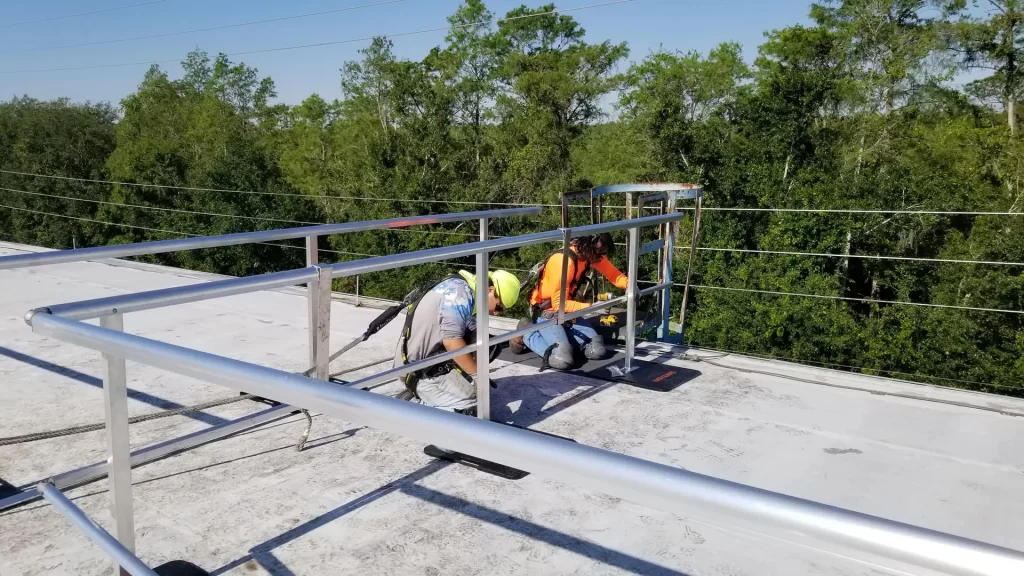
TIP: Be aware that some companies will install the fall protection equipment and then use a roofing contractor to flash the penetrations, while others (like D. C. Taylor Co.) provide turnkey services that do both. If you hire one company that performs the installation and does the flashing, there is less coordination and scheduling and may even shorten project duration and cost.
Which Fall Protection Equipment is Right for My Facility?
Fall protection is not one size fits all. There are many options. Solutions fall into two broad categories: passive vs. active. Passive fall protection solutions don’t require users to wear personal protective equipment (PPE) or actively engage with the system; the equipment is stationary. Active fall protection requires PPE and engagement from the user. The installer you choose should spend considerable time talking with you about activities personnel are performing on the roof and their frequency, as well as carefully surveying the roof. Only after hazards on the roof are assessed and an understanding of how it’s used is gained, can recommendations be provided. This step is critical to ensuring that the equipment that is installed is used and effective.
TIP: Behavior matters. If people won’t (or you don’t want them to) wear PPE, the system you install shouldn’t require it. “If a customer tells me flat out that he doesn’t want to put a harness on or he doesn’t want his employees to have to put a harness on and be tied off, then I’m going to recommend warning line and guardrail,” says Longerbeam. The only way for fall protection to be effective is if it’s used. In the scenario just mentioned, a single anchor point or horizontal lifeline is not a viable solution.
What Can My Team Do?
It can be tempting, if your facilities maintenance team is highly skilled, to assign them some part of this process (e.g., assessing needs, ordering materials, or installing equipment). Longerbeam and Stickney warn against it. Let the pros do the work. They are trained to identify hazards, understand OSHA requirements and your roof system, and install the system properly.
While well-meaning, ordering from building supply companies can increase project duration and result in change orders. Let the installer order materials once an effective plan has been drawn up. “I try to deter customers from ordering from the big one-stop-shops for things such as guardrails. We may end up missing bases, components, and pins when they are needed. A lot of times they’re sold as a package, so you’re missing a base because you have a turn here or there in the final layout. Then we’ve got to wait or delay or issue a change order because the customer has to order more parts,” explains Longerbeam.
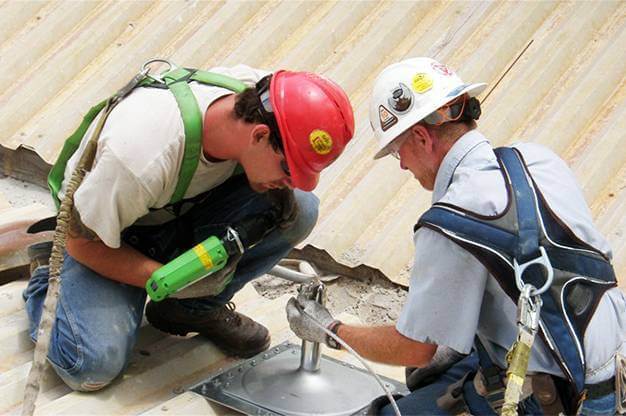
TIP: Hire a company that has a proven track record for safety. For some installations, the contractor will install the first roof anchor point while working out of a mobile elevated work platform (MEWP), then tie themselves to the new anchor to install the next one. Only a professional knowledgeable in how to work on the roof safely can execute a complicated installation without risking a fall or injury.
The best way to guarantee a successful fall protection installation is to partner with the right people.
Contact D. C. Taylor Co. today at 319.731.4118 or [email protected] to schedule a safe roof audit and discuss what equipment is right for your roof and your workers.
 Previous